
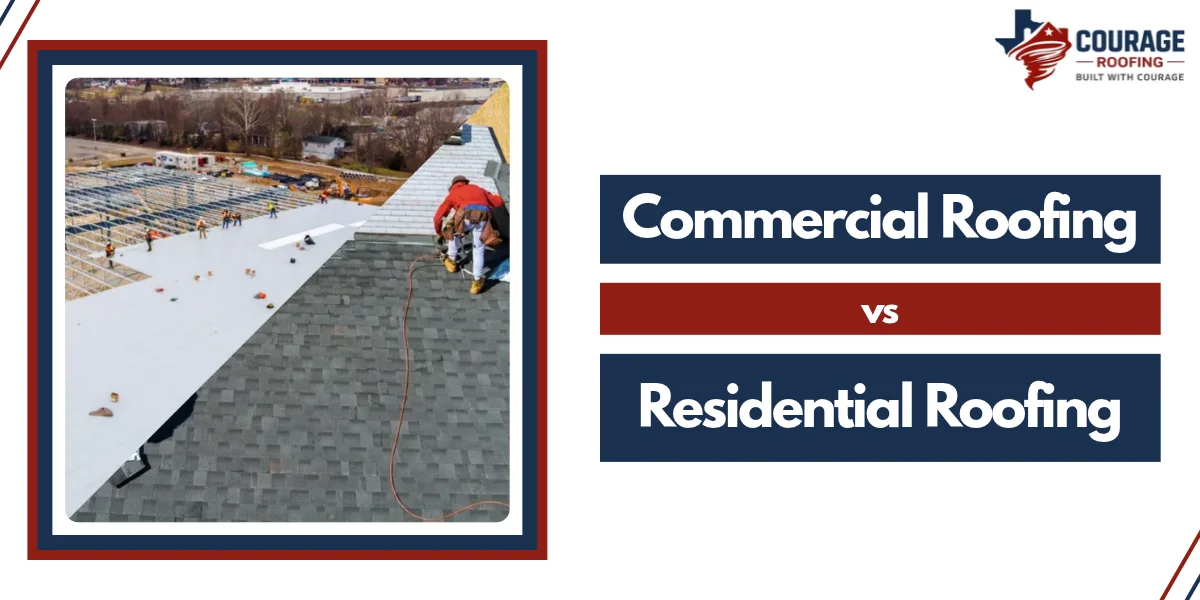
The primary difference between commercial and residential roofs lies in their pitch and design. Commercial vs residential roofing reveals contrasts in material composition, installation complexity and cost structure. Single-ply or membrane materials; commercial buildings require systems capable of managing large flat or low-sloped surfaces, standing water and heavy equipment. Sloped residential roofs use overlapping shingles to shed rain, snow and debris while prioritizing curb appeal.
Commercial vs Residential Roofing: A Quick Comparison
| Feature | Commercial Roofing | Residential Roofing |
| Roof slope and design | Mostly flat or low-sloped, designed to house heavy equipment like HVACs | Steeply pitched or sloped. Designed for fast water runoff via gravity |
| Common materials | TPO, EPDM, PVC, Modified Bitumen or BUR | Asphalt shingles, metal, tile, slate, wood shingles. |
| Installation | Large surface areas require a specialized crew, heavy machinery and complex multi-layer insulation. | Smaller scale and simpler layouts are installed via standard decking and underlayment layers. |
| Costs | Higher upfront costs due to specialized materials, engineering compliance and safety standards. | Generally more affordable and priced per sq ft based on simpler material tiers. |
| Maintenance needs | Focuses on drainage clearing, membrane integrity, and leak prevention around penetrations. | Seasonal checks and replacing damaged or missing shingles |
| Installation | Requires licensed installation specialists familiar with commercial building codes. | Handled by residential contractors focused on shingle and pitched roof applications. |
Commercial Roofing Explained
Roof Design and Slope
Features flat or low slope designs (typically under 2:12 pitch) to maximize interior space. Because water does not run off naturally, commercial roofs require engineered internal drainage, suppers or tapered insulation to prevent pooling.
Installation and Size
Extremely large surface areas spanning warehouses or retail centers. Installation happens in complex sections over extended periods using specialized multi-ply or single-ply materials.
Weight and Equipment
Commercial roofs may support heavy machinery loads like HVAC units, ventilation systems and service walkways and require reinforced structural decking.
Maintenance
Commercial roofing requires frequent, rigorous professional inspections. Flat surfaces accumulate debris and face a higher risk of leaks and pooling water, needing a specialized maintenance crew.
Energy Efficiency
Commercial roofs rely heavily on thicker multi-layer insulation and specialized reflective, white cool roof coatings to offset cooling costs for expansive indoor spaces.
Environmental Impact
Large flat expanses present major opportunities for green vegetative eco roofs, high-output solar arrays and high-reflectivity membranes that minimize urban heat islands.
Residential Roofing Explained
Roof Design and Slope
Residential roofs feature steep slopes and pitched angles, with gravity naturally pulling water, snow and debris down into gutters.
Installation and Size
Residential applications have smaller footprints. Crews install standard materials like asphalt, tiles or metal panels within a few days.
Weight and Equipment
Residential roofing bears minimal load beyond occasional lighter items like chimneys, smaller vents and solar panels.
Maintenance
Residential roofs require simple upkeep. Routine tasks include clearing gutters, minor shingle fixes and occasional visual checks.
Energy Efficiency
In residential roofs, insulation is mainly placed within the attic floor rather than on the roof surface itself, paired with ventilation and lighter shingle colors.
Environmental Impact
Residential roofing focuses on smaller solar installations or sustainable shingle materials, yielding a smaller aggregate footprint per building.
Commercial Roof Materials vs Residential
Common Types of Residential Roofs
- Asphalt shingles
- Metal roofing
- Tile (Clay or concrete)
- Slate
- Wood shakes/shingles
Common Types of Commercial Roofs
- TPO (Thermoplastic polyolefin)
- EPDM (Ethylene Propylene Diene Monomer)
- PVC (Polyvinyl Chloride)
- Modified Bitumen
- Built-Up Roofing
Is Commercial Roofing More Expensive?
Yes, commercial roofing is more expensive per total project cost due to larger surface areas. Commercial buildings are much larger, often 10,000+ sq ft, compared to average 2000 sq ft homes. On a per-square-foot basis, commercial costs can be comparable to residential roofing depending on the material used.
Cost Comparison Per Square Foot
| Commercial roof per sq ft | Residential roof per sq ft |
| $4 to $15 | Standard asphalt ranges from $3 to $12 |
| Standard TPO or flat membranes cluster around $5 to $12 | Premium options like metal or concrete tile can reach $12 to $33 |
| Due to larger surface areas, total project price frequently starts at $50,000 to over $100,000+ | Average residential replacements run between $8,000 and $22,000 |
Why Costs Differ?
- Residential roofs are steeply pitched and primarily use shingles. Commercial roofs are flat or low-sloped and require specialized membrane systems.
- Commercial projects face stricter building codes, insulation requirements and complex safety/staging setups for larger or taller buildings.
- Larger square footage often lowers the per sq ft labor rate, though specialized equipment requirements and installations offset this.
Conclusion
Commercial roofing requires specialized contractors, complex weight management for heavy equipment and rigorous drainage upkeep to prevent water pooling. Residential projects involve simpler installations on timber rafters and plywood decking, focusing on curb appeal and standard shingle replacement.
Courage Roofing delivers durable installations, fast repairs and trusted craftsmanship across Texas, providing a foundation for safe and secure property.
FAQs
What damages the roofs the most?
Severe weather damage, specifically water intrusion, hail, UV rays and high winds, damages residential roofs the most. Poor maintenance leads to trapped moisture and rot.
What are the newest types of roofing materials?
In residential roofing, breakthroughs include solar shingles (BIPV or building-integrated photovoltaics) and advanced synthetic composite shingles such as TPO-based rubberized tiles like F-wave.
What are the five most common roofing problems?
Roof leaks, damaged or missing shingles, worn or broken flashing, clogged gutters and poor attic ventilation are the most common roofing problems.