
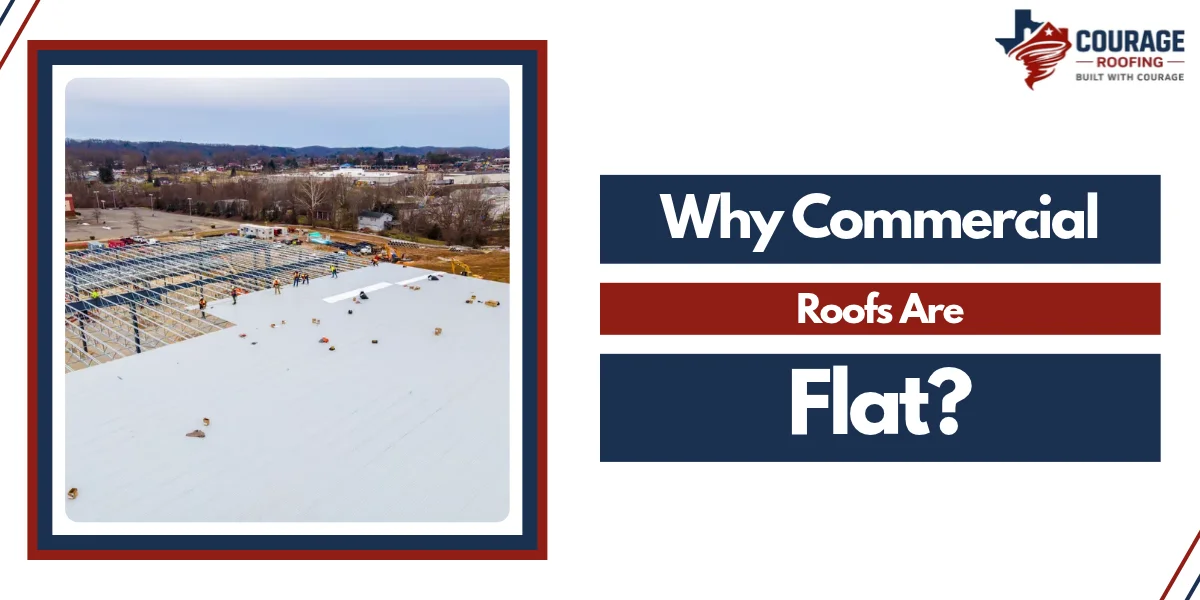
Why are commercial roofs flat? Because they cost less to build, create extra space for equipment and make maintenance much easier. Better energy efficiency and efficient drainage are the added advantages of flat roofing. Cost-effective flat roofs save interior space, while sloped roofs offer better water drainage and extended lifespan. Choosing between a flat roof and a sloped roof for commercial purposes comes down to balancing installation costs, usable rooftop space and local weather patterns.
Why do Businesses Have Flat Roofs?
Flat roofs are actually low-sloped systems, more cost-effective and practical to build over large surface areas than sloped roofs. Flat roof commercial building design features a subtle pitch- ⅛ to ½ inch per foot (0.5:12 to 2:12 pitch), a slight slant to guide water towards internal drains or scuppers.
Making commercial-sized steep roofs with large widths is not feasible. They use heavy-duty membranes like TPO, PVC, EPDM or BUR instead of standard residential shingles to ensure superior waterproofing and are the standard choice for most commercial properties, warehouses and urban offices.
Benefits of a Flat Commercial Roof
Lower Construction Costs
Flat roofs use less material and require simpler structural framing than sloped roofs, saving time and labor.
Fewer complex structural angles and less specialized installation make them cheaper to build over larger footprints, lowering installation costs.
Extra Usable Space
The level surface provides a safe and steady platform to hold large heating and cooling units, solar panels and satellite dishes. Some businesses are even turning them into outdoor seating, green gardens and patios.
- More than 25% of commercial flat roofs now integrate solar panel setups.
Better Energy Efficiency
Reflective cool roofs (white TPO or PVC) are growing at 6% annually. These directly combat the urban heat island effect and significantly reduce HVAC cooling costs.
Smaller exterior surface areas work well with reflective cool roof coatings that block heat and lower air conditioning bills.
- Green vegetative roofs are scaling sharply and projected to boom globally to a $13.15 billion market by 2034.
Easier and Safer Maintenance
Workers can walk safely across a flat surface to inspect and repair the roof and equipment without needing complex harnesses, scaffolding or safety gear.
Stable platforms make regular roof checks for ponding water and drain clearing easier.
Efficient Water Drainage
While they look flat, these roofs feature a very slight slope, built into the building design to guide rainwater safely towards internal drainage or scuppers.
Flat Roof vs Sloped Roof Commercial
| Feature | Flat Roof (Low slope) | Sloped Roof (Pitched) |
| Primary drainage | Relies on internal drains, scuppers, or tapered insulation | Gravity and pitch naturally shed water and snow |
| Average lifespan | 10-20 years | 20-30 years shingles, 40-70 years metal |
| Usable space | High. Accommodates HVAC units, solar arrays and decks | Low; cannot support heavy rooftop equipment |
| Common materials | TPO, EPDM, modified bitumen, BUR | Standing seam metal, architectural panels, shingles, tiles |
| Initial costs | Low for large footprints due to simpler layouts | Higher upfront costs due to extra framing, materials and labor |
| Maintenance needs | Frequent checks required to clear drains and prevent pooling | Lower ongoing maintenance. Difficult and risky to access. |
Conclusion
Commercial roofs are flat because they are faster and cheaper to install and more practical for large surface areas. TPO, EPDM or BUR flat roofs are more cost-effective for large commercial buildings and provide space for HVAC equipment.
Courage Roofing delivers durable installations, fast repairs and trusted craftsmanship across Texas, providing a foundation for safe and secure property.
FAQs
What is the major disadvantage of a commercial flat roof?
The main disadvantage of commercial roofing is poor drainage, which can lead to standing water, leaks or structural damage.
What type of flat roofing is the best?
TPO with white reflective coatings works best for hot, sunny areas. EPDM stands out for cold regions. The best type depends on your climate and budget.
What is the lifespan of a flat roof?
A flat roof typically lasts for 15-30 years depending on regular maintenance and the materials used.